Apartment Fire in Orange County: What Renters and Landlords Each Handle
By Buena Park Fire & Water Damage Pros 6 min read
Quick answer
After an apartment fire, the landlord's insurance pays to repair the building: framing, drywall, roof, wiring and the fixtures and appliances that came with the unit. It does not cover tenants' belongings. Renters rely on their own renters (HO-4) policy for furniture, clothing and electronics, plus hotel and meal costs while they cannot live at home.
The first hours: renter and landlord checklists
Apartment fires are the large-loss events in north Orange County. In April 2023 a fire at a Buena Park apartment complex caused about $2 million in structural damage and left residents displaced. One fire like that touches a dozen households, each with its own questions about money and housing.
If you rent
- Stay out until the fire department clears the building. OCFA covers Buena Park, Anaheim Fire & Rescue covers Anaheim and the Fullerton Fire Department covers Fullerton.
- Call your renters insurance company the same day and ask about temporary housing.
- Photograph your unit and belongings once you are allowed in, before anything is moved.
- Notify your landlord or property manager in writing, even a text or email, and keep a copy.
If you own the building
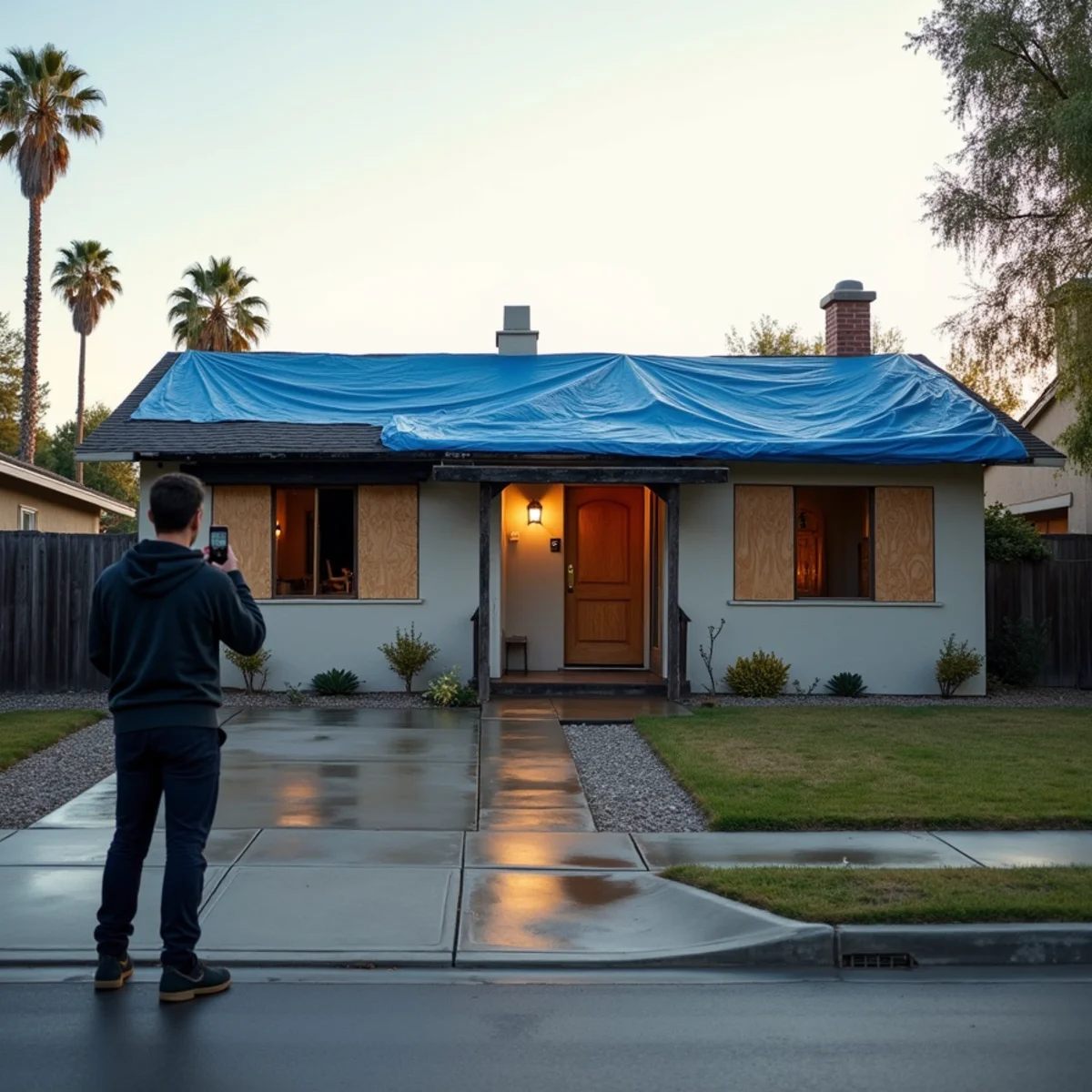
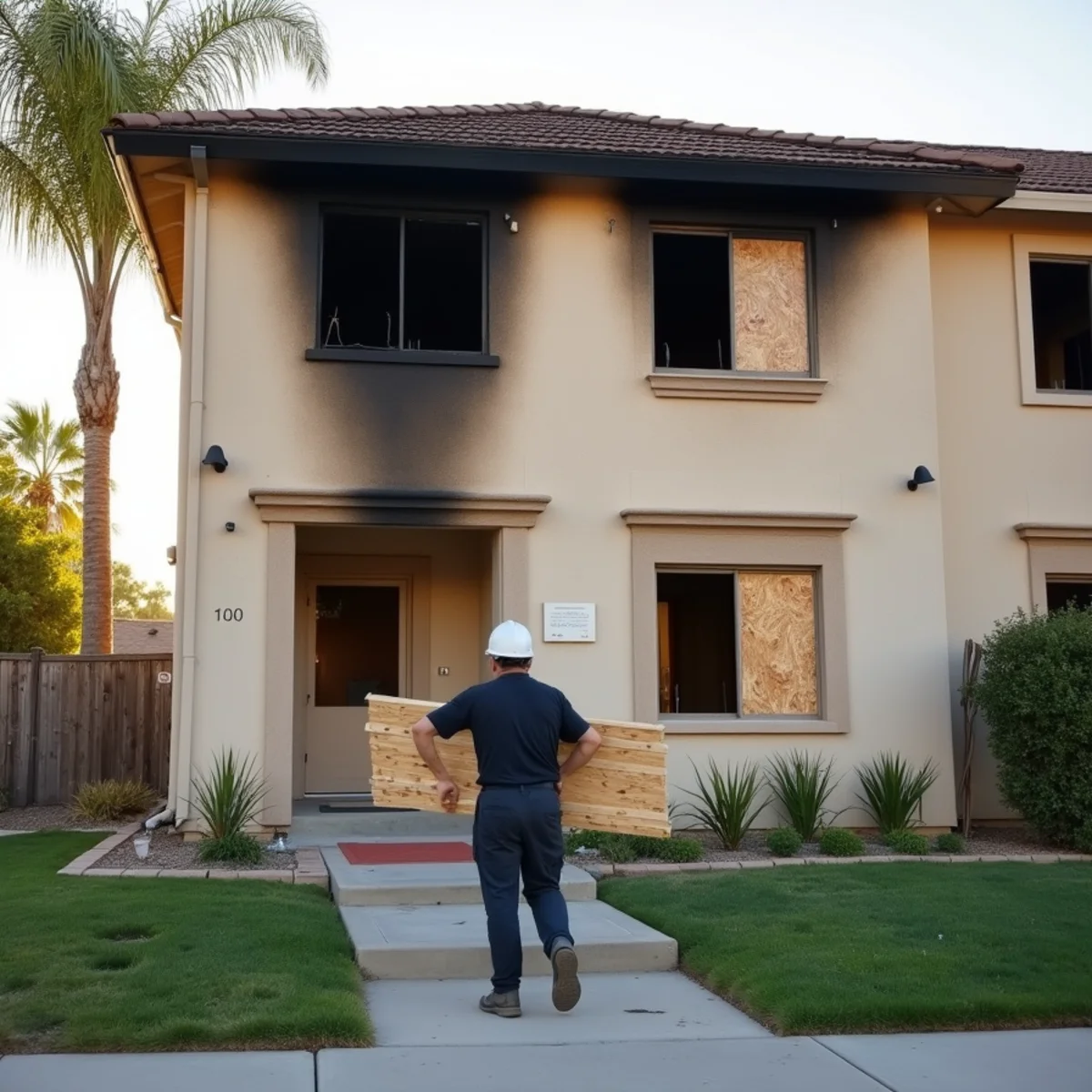
- Report the loss to your insurer and get the building secured. Boarding up openings and tarping the roof the same night keeps weather and intruders out and satisfies the policy's requirement to limit further loss.
- Shut off utilities to the damaged units if the fire department has not already done so.
- Give every tenant a written update on which units are livable and who to contact.
Building versus contents: who usually covers what
The dividing line is ownership. What the landlord owns goes on the landlord's policy; what the tenant owns goes on the tenant's. Leases differ, so treat this table as the usual pattern rather than a ruling on your unit.
| Item | Usually whose | Usually paid by |
|---|---|---|
| Roof, framing, walls, ceilings, wiring | Landlord | Landlord's property policy |
| Built-in appliances, cabinets, landlord-supplied carpet and blinds | Landlord | Landlord's property policy |
| Furniture, clothing, electronics, food | Tenant | Tenant's renters (HO-4) policy |
| Hotel, meals and extra costs while displaced | Tenant | Renters policy loss-of-use coverage |
| Rent the owner cannot collect | Landlord | Loss-of-rents coverage, if the policy has it |
| Improvements a tenant paid to install | Depends on the lease | Check both policies |
Firefighting water follows the same split. When hose water comes through the ceiling of the unit below, the landlord's policy handles the ceiling and drywall, and that tenant's renters policy handles their soaked couch.
Renters insurance: contents, hotel costs and liability
A renters (HO-4) policy usually has three parts that matter after a fire. Personal property coverage pays to clean or replace belongings. Loss-of-use or additional living expense coverage pays the extra cost of living elsewhere, meaning the hotel and restaurant spending above your normal rent and groceries. Liability coverage applies if the fire started in your unit and someone claims you caused it.
Keep every receipt from the first night onward. Insurers pay for documented spending, and a hotel bill on a credit card statement is easy to prove.
Smoke-damaged belongings are often cleanable. Contents cleaning and pack-out moves your things out of the unit, cleans what can be saved and builds an itemized inventory of the rest for your claim. That is often the only service a renter needs, since the walls belong to someone else.
The landlord's side: structure, common areas and the units next door
The building owner manages the structural side of the job: securing the building, drying out firefighting water, cleaning smoke from hallways, stairwells and attic spaces, and rebuilding the burned units. Many Buena Park apartment blocks are older two-story buildings, so a pre-demolition asbestos survey under Rule 1403 usually comes before any burned drywall is removed.
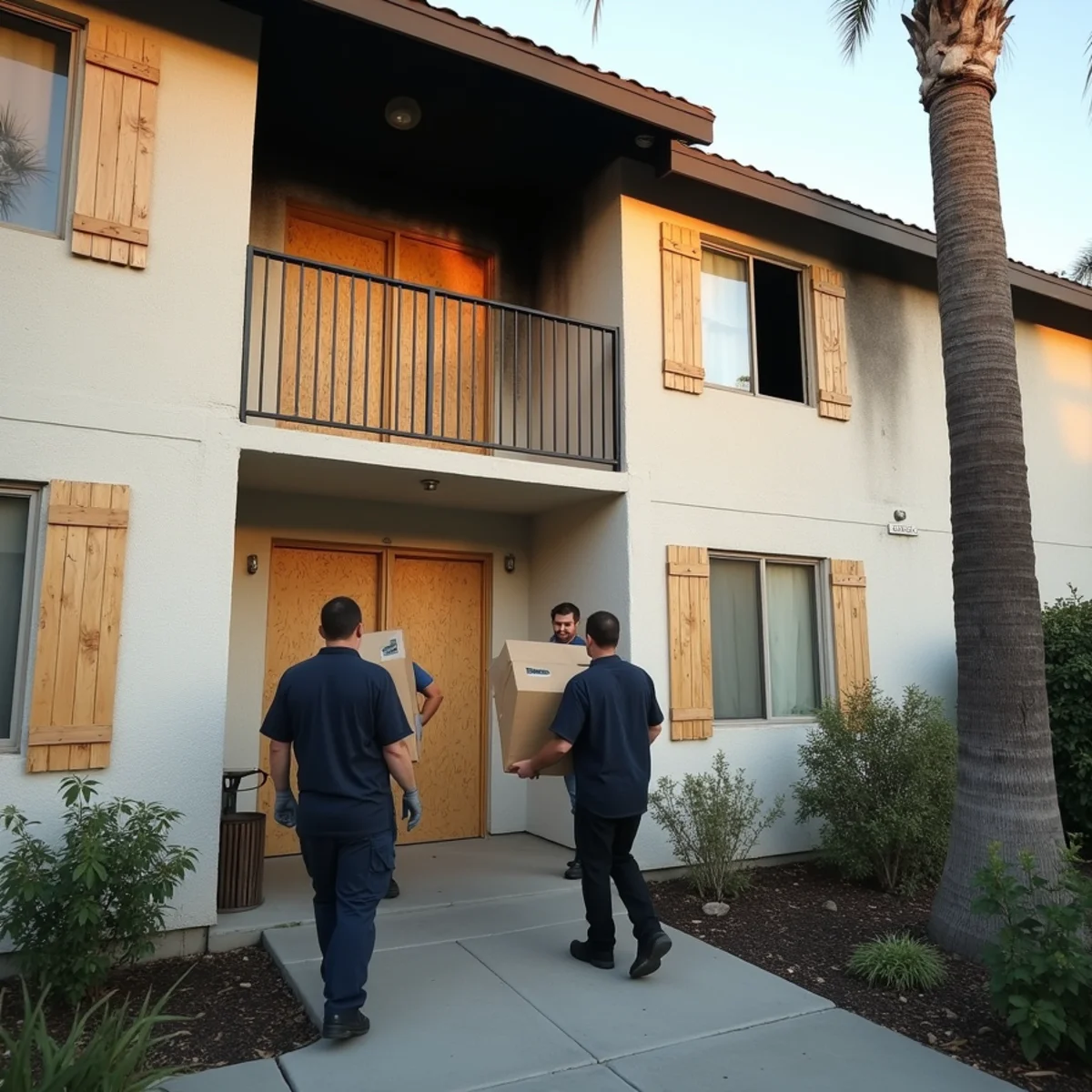
Owners choose their own contractors. Ask for a written scope that separates the fire unit from the smoke-only units, because adjusters handle them differently and tenants in the lightly damaged units want to know when they can come home.
Rent, unlivable units and the lease
California's Civil Code has long-standing rules for rented property that is damaged or destroyed. Section 1932 lets a tenant end the lease when the greater part of the unit is destroyed by a cause other than the tenant's own lack of care, or when the damaged part was a material reason the tenant rented the place. Section 1933 provides that a lease ends when the entire premises are destroyed.
- If the unit cannot be lived in, rent generally is not owed for that period. Partial damage usually supports a reduction in rent rather than none at all.
- If the lease ends, the security deposit is handled the way it would be at any move-out, so ask for it in writing.
- Whether you can move back after repairs depends on your lease and the terms you agree to. Get any promise to hold the unit in writing.
- If the tenant caused the fire, these rules can work differently, and the landlord's insurer may seek repayment.
Smoke-only units beside the fire
The units around a fire often have no flame damage at all, just smoke. In two-story garden apartments, smoke moves through a shared attic, through wall cavities and down open corridors, and leaves soot on vents and a smell that lasts for weeks. The unit below may also have firefighting water in its ceiling.
Who pays follows the same line: the owner handles the walls, ceilings and ductwork, and the tenant's renters policy handles clothes and furniture. A smoke-only unit can often be cleaned and reoccupied while the fire unit is still being rebuilt, provided the air handling is isolated. This is common in the dense apartment corridors of west Anaheim, covered on our Anaheim fire and smoke damage page, and in the student rentals described on our Fullerton fire damage restoration page.
From the job site: where apartment fire jobs go wrong
Apartment fires put two sets of insurance, two sets of priorities and sometimes a dozen households on one job. Crews see the same friction points again and again:
- A tenant's belongings get hauled out with the debris. The building crew is there for the structure. Tenants should photograph their own things and ask that nothing of theirs leaves the unit until it is on their own inventory.
- Smoke-only units get skipped. The burned unit gets the attention while the apartments beside and above it, sharing an attic or a duct run, are left with residue. Neighbors should ask the manager in writing whether their unit is in the cleaning scope.
- Families move back too early. A unit can be habitable on paper and still smell, especially if the building's ducts were not cleaned. Ask what was cleaned and when.
- Everything happens by phone. Notices, move-out dates and access requests that are never put in writing turn into disputes later. Email or text the manager and keep copies.
- Keys and access go missing. With boards on the doors, tenants need a way to retrieve medication, documents and work items. Agree on an access time with the manager and the crew.
Three more points from California law are worth knowing, in general terms. When a tenancy ends, the landlord generally has 21 days to return the security deposit or account for it. During a declared state of emergency, rent increases above 10 percent are generally prohibited. And if a landlord's negligence caused the fire, a tenant may have a claim for the loss. Ask a tenant rights organization or an attorney how these apply to you.
Getting help for a unit or a whole building
A person picks up at (831) 303-1192 at any hour. Buena Park Fire & Water Damage Pros connects renters and owners with independent fire and smoke restoration contractors, from contents-only jobs for one household to board-up and cleanup for a whole building. Every fire restoration crew we send is licensed where California requires it, and insured.
You get a scope and price in writing before work starts, photo documentation for the insurance claim and a contents inventory, and the crew can meet the adjuster on site.
The bottom line for renters and landlords
If the unit is unlivable, California law generally does not expect rent for that time, and a destroyed unit can end the lease. This is general information, not legal advice. Put notices in writing, keep receipts, and get separate scopes for the building and for each household's belongings.
Call (831) 303-1192 at any hour for emergency board-up of the building or contents cleaning and pack-out for a single unit. Crews work across west Anaheim, Fullerton and Buena Park, with the scope and price in writing before work starts.
Related questions
Do I have to keep paying rent after an apartment fire?
Generally not for any period when the unit cannot be lived in, and partial damage usually supports a rent reduction. If the whole unit is destroyed, the lease can end. Put your situation to the landlord in writing, and get legal advice for any dispute.
Does my landlord's insurance cover my belongings?
No. A landlord's property policy covers the building and the owner's property, not a tenant's furniture, clothing or electronics. Those are covered only by the tenant's own renters policy.
Who pays for my hotel after an apartment fire?
Usually your renters policy, through its loss-of-use or additional living expense coverage, up to its limits. Without renters insurance there is generally no automatic payment for housing, though the American Red Cross often helps with the first nights.
Our apartment only has smoke damage. Can we hire our own cleaning crew?
For your belongings, yes, and your renters policy may pay for it. Cleaning walls, ceilings or ducts is the landlord's decision, so get written approval from the owner or property manager before anyone works on the building itself.