How to Get Smoke Smell Out of a House After a Fire
By Buena Park Fire & Water Damage Pros 6 min read
Quick answer
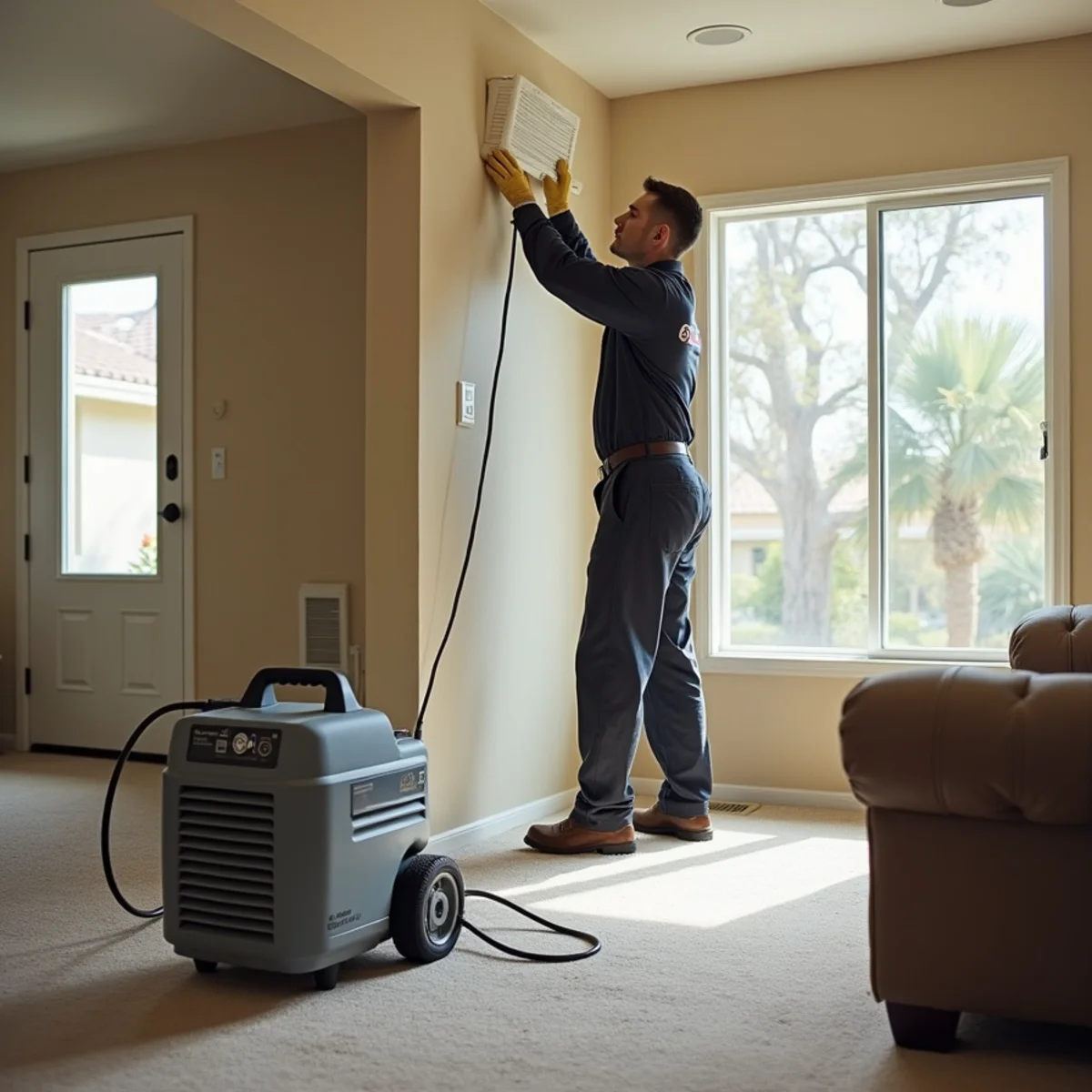
Smoke smell comes from residue soaked into porous materials, so it leaves only when that residue is removed or sealed in. Start by airing the house, replacing the HVAC filter, washing hard surfaces, laundering fabrics and HEPA vacuuming carpet and upholstery. Skip sprays and candles; they only cover the smell.
Why the smell stays after the fire is out
What you smell is not leftover air. Smoke is a mix of fine particles and gases, and both settle into anything porous: drywall paper, ceiling texture, carpet pad, upholstery, wood framing and the fiberglass insulation in the attic. Those materials then release odor slowly for weeks, and faster whenever they warm up.
That is why a house that seemed fine in the morning can smell strongly by late afternoon. In north Orange County, an attic above a single-story ranch home bakes on summer days, and the insulation up there gives off whatever it absorbed. Plastic fires are the worst for this. Burning synthetics leave a wet, smeary residue with a sharp odor that clings harder than smoke from wood or paper.
What you can do yourself in the first week
For a small fire, or a home that caught smoke from a fire next door, these steps clear a lot of odor at no real cost:
- Ventilate on clean-air days. Open windows and set box fans to blow out, creating a cross draft. Close up again if outdoor air quality is poor.
- Swap the HVAC filter now, and again after a week of cleaning. The system pulled smoke through it during the fire.
- HEPA vacuum carpet, rugs and upholstery, slowly and more than once. A regular vacuum pushes fine particles back into the room.
- Wash hard surfaces with a mild detergent: walls, cabinet faces, window sills, blinds and light fixtures. Black dry soot needs dry-sponge soot removal before any water touches it.
- Launder fabrics in cool or warm water, and air dry until the smell is gone. Dryer heat can set odor into fibers.
- Empty and wipe out the refrigerator, closets and drawers. Enclosed spaces hold odor long after open rooms clear.
- Leave out baking soda or activated charcoal in closets and cabinets. It absorbs some odor in still air, but it does not clean anything.
Give it a week. If the smell keeps fading, keep going. If it plateaus, the odor is coming from somewhere you cannot reach with a sponge.
Why sprays, candles and air fresheners make it worse
Fragrance does not neutralize smoke. It layers a second smell on top, and the result is often a sweet, burnt mix that is harder to live with than the original. Candles and plug-ins also add their own fine particles to air that is already loaded with them.
Masking has a practical cost too. A cleaner or adjuster walking through a perfumed house has a harder time telling which rooms still hold smoke, and the source stays put. When the fragrance wears off, the smoke smell is right where it was.
From the job site: where home remedies help and where they stall
Most popular tips do something. The problem is expecting them to do more than they can. Here is how crews see the common ones play out:
| Remedy | What it actually does | Where it stalls |
|---|---|---|
| Box fans in windows, blowing out | Pulls smoky air out and fresh air in, which helps in the first days | Does nothing for residue in drywall, insulation or ducts |
| Baking soda on upholstery, vacuumed after a day | Absorbs some odor from the surface of fabric | Rarely reaches odor deep in cushions and foam |
| Bowls of activated charcoal or vinegar | Takes a little odor out of the air in a closed room | The walls keep releasing more as fast as it absorbs |
| Washing walls with vinegar or a degreaser | Removes surface residue, the real source, on painted and hard surfaces | Flat paint, ceilings and anything porous may still need sealing |
| A rented ozone machine | Can cut odor in an empty house | Unsafe with people, pets or plants inside, and the smell returns if residue is still on surfaces |
One tip crews wish more people followed: once clothes, bedding and curtains are washed, store them somewhere else until the house is clean. Put back into a smoky closet, fresh laundry picks the smell right back up, and it feels like nothing worked.
Source removal: the step that actually ends the smell
Every reliable odor job starts with getting rid of what holds the smell. In practice that means cleaning what can be cleaned, and removing what cannot:
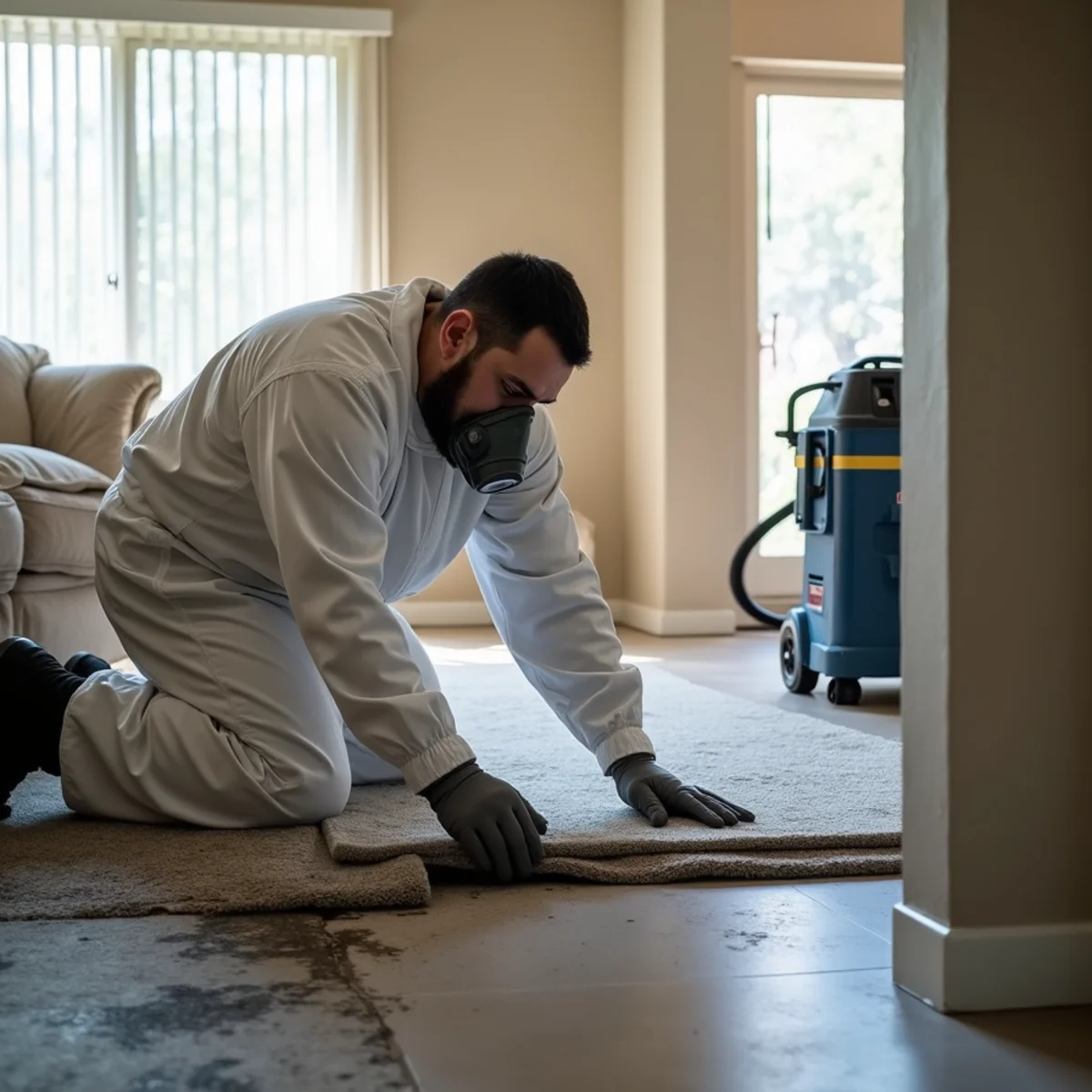
- Charred or blistered drywall, trim and cabinet boxes
- Carpet pad under a carpet that took heavy smoke
- Attic insulation above the fire room, or across the whole attic after a large fire
- Mattresses, pillows and foam cushions that do not clear after cleaning
- Flexible duct runs that held hot smoke
Removal in an older home has a catch. Drywall joint compound, popcorn ceilings and some duct tape and insulation in pre-1980 houses can contain asbestos, and South Coast AQMD Rule 1403 requires a survey before that material is torn out. A building-wide job like this falls under smoke damage cleanup, where the residue is handled room by room before any odor treatment begins.
Sealing, thermal fogging, hydroxyl and ozone compared
Once the source is gone, these treatments deal with what is left in the structure and the air. Each one has a specific job:
| Method | What it does | Can people stay home? | Best use |
|---|---|---|---|
| Odor-blocking primer | Shellac or oil-based primer locks residue into framing and drywall | Yes, with ventilation | Cleaned framing in the fire room, attic sheathing, walls before repainting |
| Thermal fogging | Heated deodorant fog follows the same paths smoke took into cracks and cavities | No, during treatment | Wall cavities, closets and contents after cleaning |
| Hydroxyl generator | Creates hydroxyl radicals that break down odor molecules over several days | Yes | Occupied homes, rooms with electronics and fabrics |
| Ozone | Strong oxidizer that works faster on heavy odor | No: people, pets and plants out | Empty structures; can degrade rubber and some fabrics |
None of these is a shortcut around cleaning. Ozone run in a house that still has soot on the walls will cut the smell for a while, and it returns as the residue keeps releasing. Our page on smoke odor removal explains how a crew chooses between them.
HVAC ducts and filters: the odor highway
In most Buena Park and west Anaheim tract homes, the furnace and ducts run through the attic. During a fire, the return vent pulls smoke into the system, and the ducts then deliver it to every bedroom. Afterward, each time the system starts, it sends a fresh puff of odor through the house.
- Keep the system off until the filter has been replaced.
- Use the highest-rated filter your system is designed to handle; an HVAC technician can tell you what fits.
- If the smell surges when the fan kicks on, the ducts, coil or blower need cleaning, and flexible duct that held heavy smoke is often replaced instead.
Apartments, shared walls and when to call
In the dense apartment corridors of west and central Anaheim, smoke often comes from someone else's unit through shared attics, wall cavities and hallways. Washing your own walls helps, but odor that keeps seeping in from next door needs the building owner involved. Renters should tell the landlord in writing and check their renters policy for contents cleaning. See fire and smoke restoration in Anaheim for how those jobs usually run.
Call (831) 303-1192 if the smell is the same after a week of cleaning, comes back on hot afternoons, or is strongest in rooms the fire never touched. You get a person on the phone 24/7, and the nearest available crew gives you a scope and price in writing before work starts.
The bottom line on getting smoke smell out
Air the house, clean what you can reach and give it a week. If the odor returns on warm days or fills rooms the fire never reached, it is in drywall, insulation or ducts, which takes source removal, odor-blocking primer and hydroxyl or ozone treatment. That is the work covered by smoke odor removal, with soot removal for residue you can still see.
For help in Buena Park, Anaheim and nearby cities, call (831) 303-1192. A person answers 24/7, and the scope and price are in writing before any treatment starts.
Related questions
How long does smoke smell last after a fire?
Light odor from a small, quickly cleaned fire can fade within a week or two. Odor from residue left in insulation, ducts or porous finishes can linger for months and come back each time the house warms up. The answer depends far more on whether the source is removed than on time.
Does vinegar or baking soda remove smoke smell?
Both help a little in small, enclosed spaces. Bowls of vinegar or boxes of baking soda absorb some airborne odor, and a vinegar rinse helps on glass. Neither removes residue from walls, insulation or ducts, which is where a lasting smell comes from.
Can I stay in the house during ozone treatment?
No. Ozone treatment requires the home to be empty of people, pets and houseplants, and the crew airs it out before anyone returns. If you need to stay home, hydroxyl generators are the usual choice because they are safe in occupied rooms.
Will painting over the walls get rid of the smell?
Regular latex paint will not. Smoke odor and staining bleed through it, sometimes within days. Walls need cleaning first, then a shellac or oil-based odor-blocking primer, and only then a finish coat.